
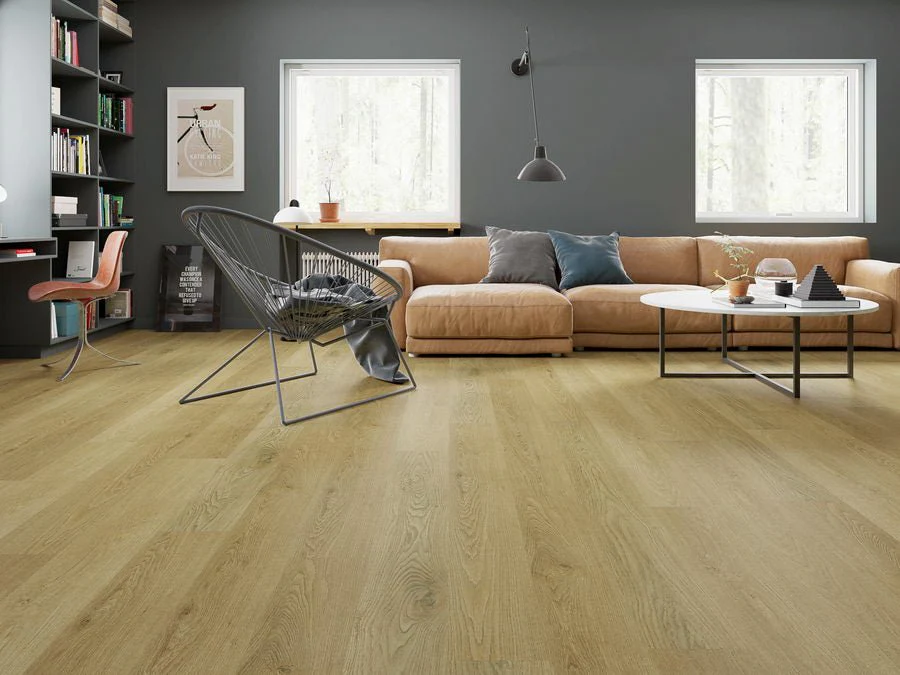
If you’re in the process of choosing flooring, you’ve surely come across the two most popular options: vinyl flooring and laminate flooring. Both can be modern, attractive, and practical choices, but there are significant differences between them in terms of durability, water resistance, sound absorption, and price. In this article, we’ll take a detailed look at their pros and cons and help you decide which flooring is a better fit for your home.
Laminate flooring – the classic choice
Laminate flooring has been one of the most popular flooring options in Hungary over the past few decades. The reason is simple: affordable prices, a wide selection, and quick installation.
Advantages:
- Affordable price – laminate flooring is generally less expensive than vinyl or real wood flooring.
- A wide selection of colors and patterns —available in a variety of wood-grain and modern designs.
- Easy installation —quick to set up with a click-lock system.
- Scratch-resistant surface – higher-quality laminate floors (AC4 and AC5 categories) are extremely resistant to scratches and the movement of furniture.
Disadvantages:
- Not waterproof —most laminate floors cannot withstand water, and prolonged exposure to moisture causes them to buckle.
- Feels cold —it’s stiffer and colder underfoot than vinyl.
- Noisier – it makes a clattering sound when you walk, so you often need a mat.
- Renovation is not possible —the damaged panels must be replaced; sanding is not an option.
Vinyl Flooring – The Modern Alternative
Vinyl flooring (LVT or SPC) has become very popular in recent years. The technology has advanced significantly, making it more durable, quieter, and more comfortable than laminate flooring.
Advantages:
- 100% waterproof – vinyl flooring is an excellent choice for the kitchen, bathroom, or entryway.
- Quieter —softer when walking, doesn't make a clattering sound.
- Warmer feel —makes you feel more comfortable even when barefoot.
- Durable and flexible —it withstands everyday wear and tear and is less prone to damage.
- Slim design – can be installed over existing flooring during a renovation.
- Wide selection of patterns —available in wood- and stone-effect designs, so they fit into almost any interior.
Disadvantages:
- Higher price – high-quality vinyl flooring is generally more expensive than mid-range laminate flooring.
- It's hard to remove —removing glued-down vinyl flooring is a lot of work.
- More sensitive to sunlight —cheaper versions may fade when exposed to strong UV light.
- Surface fragility —although it is flexible, sharp objects (e.g., knives, heavy furniture) can cause dents.
Laminate vs. Vinyl Flooring – A Comparison
| Criterion | Laminate flooring | Vinyl flooring |
|---|---|---|
| Price | More favorable | More expensive |
| Effect of Water | Not waterproof | 100% waterproof |
| Wear Resistance | Good (AC4-AC5) | Very good |
| Sense of comfort | Colder, harsher | Warmer, more flexible |
| Sound Effects | Clattering, noisy | Quieter, softer |
| Installation | A simple, click-based system | Both snap-together and glued versions |
| Upgradability | That's not possible | Exchange only |
| Applications | Living room, bedroom, office | Kitchen, bathroom, living room, entryway |
Which one should you choose for your home?
The decision depends mostly on your needs and the space available:
- If you're price-conscious → laminate flooring is the better choice, especially for bedrooms and living rooms.
- If you're looking for durability and water resistance → vinyl flooring is ideal, especially for the kitchen, bathroom, and entryway.
- If soundproofing and comfort are important → vinyl is also the top choice.
- If you want a quick, inexpensive, and attractive solution → laminate is simple and practical.
Tips for Choosing
- Always factor in the total cost —don't just calculate the price of the flooring, but also include the underlayment, baseboards, and installation labor.
- Ask for a sample —feel it, walk on it—that way it'll be easier to decide which one you like best.
- Pay attention to the warranty —high-quality vinyl and laminate flooring is available with warranties ranging from 15 to 25 years.
- Professional installation —improper installation shortens the lifespan of both types of flooring.
Summary
Choosing flooring is a long-term decision, so it's worth carefully considering your options.
- Laminate flooring can be a cost-effective, attractive, and durable solution for dry rooms.
- Vinyl flooring offers greater comfort and complete water resistance, making it a more versatile choice, although it is slightly more expensive.
If you want to be on the safe side, ask a professional for help; they can give you specific advice based on the characteristics of the location.
👉 The experts at padlojurkolas.hu are happy to help you choose the right flooring and ensure it’s installed professionally, so your home will remain beautiful and durable for many years to come.